
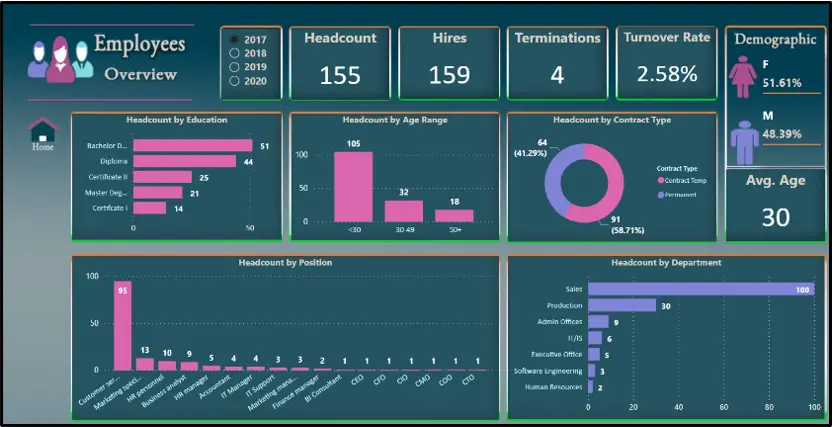
A company needs data dashboarding for several reasons:
Data-Driven Decision Making: Data dashboarding provides real-time, consolidated views of key metrics and performance indicators, allowing businesses to make informed, data-driven decisions. Dashboards provide a clear and concise visualization of data, enabling executives, managers, and employees to quickly assess the state of the business and identify areas that require attention or improvement.
Performance Monitoring: Dashboards allow companies to monitor performance across various departments, teams, or projects. By tracking key performance metrics in real-time, businesses can identify trends, anomalies, and patterns that can impact their operations. Dashboards help in assessing progress towards goals, identifying bottlenecks, and taking proactive measures to optimize performance.
Efficient Reporting and Communication: Dashboards streamline the reporting process by consolidating and presenting data in an easily understandable format. Instead of manually preparing reports or sifting through multiple spreadsheets, stakeholders can access relevant information through interactive dashboards. This improves communication and collaboration across teams, ensuring everyone has access to the same accurate and up-to-date data.
Data Transparency and Accountability: Data dashboards promote transparency within the organization by making data accessible to all relevant stakeholders. By providing visibility into performance metrics, businesses foster a culture of accountability, where individuals and teams take ownership of their goals and strive for continuous improvement. Dashboards also help in identifying and addressing performance gaps or inconsistencies.
Identifying Trends and Opportunities: Dashboards enable businesses to identify emerging trends, patterns, and opportunities. By visualizing data from different sources, businesses can uncover insights that may not be apparent in isolated datasets. Dashboards facilitate the exploration of data relationships and correlations, empowering companies to make strategic decisions based on actionable insights.
Risk Management: Data dashboards assist in risk management by providing early warning signs and indicators of potential risks or issues. By monitoring key risk indicators and performance metrics, businesses can take proactive measures to mitigate risks and minimize potential negative impacts. Dashboards allow for timely intervention and decision-making to address emerging risks.
Customer Insights: Dashboards help businesses gain a deeper understanding of their customers by visualizing customer-related data, such as demographics, preferences, behaviors, and purchase patterns. By analyzing customer data through dashboards, companies can identify customer segments, track customer satisfaction, and personalize their marketing and sales efforts to enhance customer experience and drive customer loyalty.
Strategic Planning and Goal Alignment: Dashboards assist in strategic planning by aligning goals and objectives with performance metrics. By tracking progress towards strategic goals, businesses can ensure that their activities are aligned with their broader vision. Dashboards enable businesses to monitor the effectiveness of their strategies and make adjustments as necessary to achieve their desired outcomes.
In summary, data dashboarding provides businesses with a holistic view of their performance, facilitates data-driven decision-making, promotes transparency and accountability, and empowers businesses to identify trends, opportunities, and risks. By leveraging data dashboards, companies can optimize their operations, drive growth, and stay competitive in today’s data-driven business landscape.